
The Best Training Split for Muscle Mass in 2026
Push/Pull/Legs, Upper/Lower, or Full Body? Here's the data-backed answer for maximising hypertrophy.
The Best Training Split for Muscle Mass in 2026
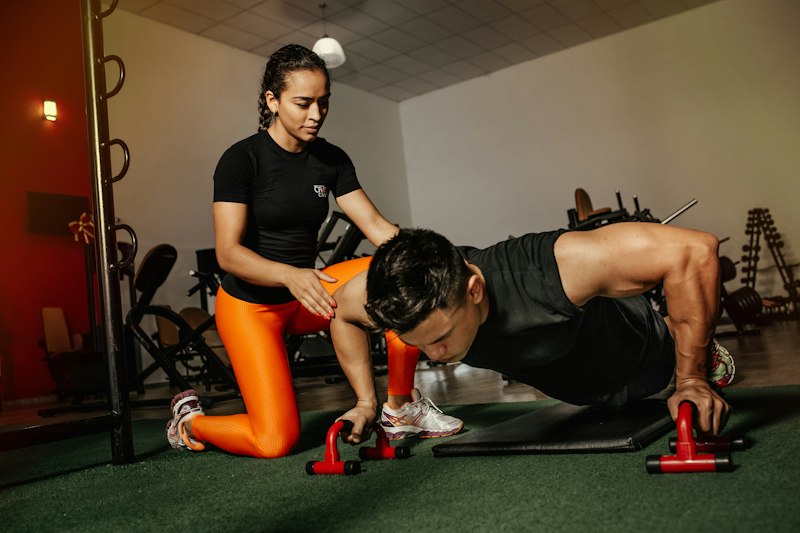
In the evolving landscape of fitness science, the "best" workout split is no longer about blindly following your favorite influencer’s routine; it is about precision, recovery, and mechanical tension. As we head into 2026, the data-backed approach to hypertrophy (muscle growth) has moved away from the outdated "bro-split" toward systems that prioritize optimal frequency and volume management. Whether you are a dedicated lifter or a rising enthusiast, choosing the right framework is the foundation of your physique. But with three major contenders—Push/Pull/Legs, Upper/Lower, and Full Body—which one truly reigns supreme?
The Case for High-Frequency Training
Modern research consistently highlights the importance of protein muscle synthesis (MPS). For most natural lifters, MPS remains elevated for roughly 24 to 48 hours after a training session. This suggests that hitting each muscle group at least twice per week is significantly more effective than the old-school once-a-week approach.
The Upper/Lower split remains the gold standard for most intermediates in 2026. By dedicating two days to the upper body and two to the lower, you hit every major muscle group twice while allowing for 48–72 hours of recovery between sessions. This balance prevents systemic fatigue and allows for high-intensity effort on big compound movements like squats, deadlifts, and overhead presses. It is the perfect marriage of recovery and frequency.
Maximizing Hypertrophy with PPL
If you prefer a higher volume approach, the Push/Pull/Legs (PPL) split is your best ally. PPL organizes your workouts by movement patterns: "Push" for chest, shoulders, and triceps; "Pull" for back and biceps; and "Legs" for your entire lower body.
In 2026, the most effective PPL programs utilize a "6-day on, 1-day off" rotation or an "on/off" alternating schedule. This allows you to dedicate a massive amount of focus to specific muscle groups in a single session. To maximize gains here, prioritize progressive overload—the steady increase of weight or reps—in your primary lifts, and don't neglect your nutrition. Supplementing with creatine monohydrate remains the undisputed king of performance, while a high-quality whey isolate ensures your body has the amino acids needed to repair those micro-tears immediately post-workout.
Practical Tips for Your Routine
Regardless of which split you choose, follow these three rules for 2026:
1. Focus on Proximity to Failure: You don’t need to train to failure on every set, but you should finish most sets within 1–2 reps of failure (RPE 8–9).
2. Prioritize Sleep: Muscle isn't built in the gym; it is built while you recover. Aim for 7–9 hours of quality sleep to optimize hormonal output.
3. Log Your Progress: If you aren't tracking your weights, you’re just exercising, not training. Use an app or a journal to ensure you are doing more today than you did last month.
Ultimately, the best training split is the one you can stick to consistently for months, not weeks. While Upper/Lower offers the best balance of recovery for busy individuals, PPL provides the volume needed for those laser-focused on specific muscle development. Listen to your body, track your metrics, and stay the course. The results will follow.